
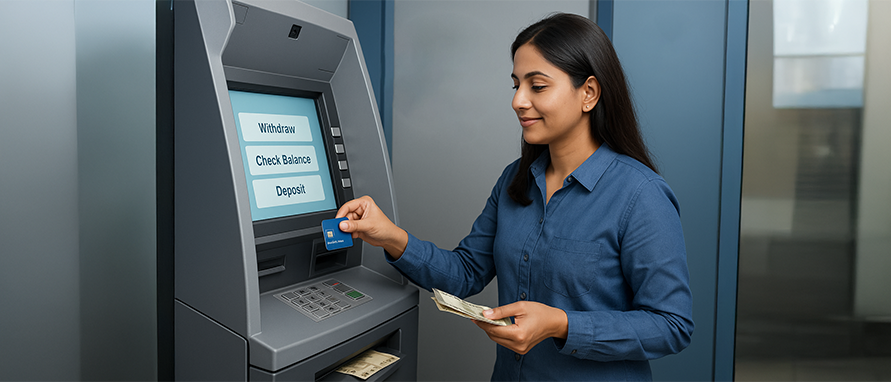
Landing in a foreign country brings an unmistakable rush of excitement. Whether you are navigating the chaotic alleyways of Marrakech or stepping out of the train into the cool air of Zurich, your first practical hurdle usually involves getting local currency. While cashless payments have expanded across the globe, holding physical cash remains an absolute necessity for street food vendors, local transit, tipping, and small neighborhood shops.
Unfortunately, walking up to the nearest ATM and inserting your standard debit card can trigger a brutal financial penalty. Between international out-of-network charges, foreign transaction fees, and predatory exchange rates, a simple cash withdrawal can easily cost you ten to twenty percent of the total transaction value. Sidestepping these hidden banking traps does not require financial wizardry, but it does require a deliberate strategy before you pack your bags.
Understanding the Hidden Cost of Getting Cash Abroad
Before diving into solutions, it helps to understand exactly where your money goes when you pull cash from an overseas ATM. The high cost of international cash withdrawals is rarely driven by a single fee; rather, it is a combination of stacked charges designed to siphon funds from unsuspecting travelers.
First, your home bank typically charges a flat international ATM fee for using an out-of-network machine, often ranging from three to five dollars per transaction. Second, the foreign bank operating the ATM will frequently add its own local operator fee, sometimes called a surcharge, just for the privilege of using their machine. Third, and most damaging, is the currency conversion fee—a percentage-based markup on the exchange rate that your bank levies for processing foreign currency.
When you compound these fees, withdrawing small amounts of cash repeatedly throughout your trip acts as a slow leak on your travel budget. Minimizing these expenses requires shifting how you choose your banking partners, select your ATMs, and handle currency conversions.
Choosing the Right Bank Accounts Before You Leave
The single most effective step you can take to eliminate ATM fees happens months before your flight, right at your home computer. Traditional big-box banks are notorious for penalizing international travelers with heavy fees, but a growing number of modern checking accounts and online fintech platforms cater specifically to globetrotters by completely waiving these costs.
Look for a checking account that offers worldwide ATM fee reimbursements. Certain online banks and credit unions will refund every single penny of domestic and international ATM operator fees charged by third-party banks at the end of each statement cycle. By pairing this type of account with a debit card that carries zero foreign transaction fees, you can use almost any ATM in the world completely free of charge.
If your primary bank cannot offer fee-free international banking, consider opening a secondary travel-focused checking account specifically for your trips. Funding this account with only the spending money you need for a vacation also adds an extra layer of security against card skimming and fraud while abroad.
Mastering the Dynamic Currency Conversion Trap
If you have traveled internationally before, you have likely encountered one of the most insidious tricks in modern banking: Dynamic Currency Conversion, universally known as DCC.
As you complete a transaction or a cash withdrawal at an overseas ATM, the screen will often present you with a seemingly helpful choice. It will ask whether you want to be billed in your home currency or the local currency of the destination. At first glance, seeing the total amount in US dollars feels comforting because it removes the mental math of conversion rates.
Always choose to be billed in the local currency.
When you select your home currency, the foreign ATM operator applies its own proprietary exchange rate, which is heavily inflated and heavily stacked in their favor. This markup can add an extra five to ten percent to the cost of your withdrawal instantly. By opting for the local currency, you force the conversion to be handled by your home bank or payment network, which typically uses the official wholesale interbank exchange rate with a much fairer conversion cost.
Selecting the Best Physical ATMs Abroad
Not all ATMs are created equal, and where you slide your card matters just as much as which card you use. Walking up to a random machine attached to a currency exchange kiosk or located in a high-density tourist zone is a gamble you want to avoid.
Bank-Affiliated ATMs Inside Secure Lobbies
Whenever possible, withdraw cash from ATMs physically attached to major, reputable local banks. Even better are the machines located inside secure bank vestibules or lobbies during operating hours. These indoor terminals are far less susceptible to physical card skimming devices—small, deceptive hardware attachments placed over the card slot to steal your data—and they generally offer lower baseline operator fees than independent standalone machines.
Avoiding Independent ATMs and Kiosks
Independent ATMs operated by private companies rather than established financial institutions—often found in convenience stores, souvenir shops, airports, and tourist attractions—are designed to exploit desperate travelers. They routinely charge exorbitant operator fees and offer deeply unfavorable exchange rates. If you land at an airport and need immediate cash for a taxi or train, withdraw only the bare minimum needed to get to your destination, and wait until you reach a proper bank branch in the city center to pull out your main funds.
Smart Withdrawal Habits to Minimize Costs
Even with the best accounts and strategic ATM selection, managing your cash flow efficiently while traveling prevents unnecessary transactions and reduces exposure to risk.
Make Fewer, Larger Withdrawals
Because many traditional banks charge a flat fee per transaction rather than a percentage, withdrawing twenty dollars five separate times will rack up five times the fees of pulling one hundred dollars in a single transaction. Calculate your realistic cash needs for a few days at a time, find a reputable bank-affiliated ATM, and withdraw a larger lump sum.
Keep a Backup Cash Stash
While carrying large amounts of cash is unwise, relying entirely on a single piece of plastic is equally risky. If your card gets flagged for suspected fraud, damaged in a machine, or lost, you can find yourself stranded without funds. Always travel with at least two different debit or credit cards stored in separate locations, along with a modest emergency stash of home currency that can be exchanged easily if necessary.
Conclusion
Navigating foreign currency and avoiding excessive ATM fees does not require complicated financial acrobatics or living in fear of your bank statements. By setting up a fee-free travel checking account before your trip, staying vigilant against the hidden markup of Dynamic Currency Conversion, choosing secure bank-affiliated ATMs, and planning your cash withdrawals strategically, you can keep your hard-earned money where it belongs: in your travel fund. A little preparation goes a long way toward ensuring that your financial logistics remain completely invisible, leaving you free to focus entirely on the adventure ahead.