


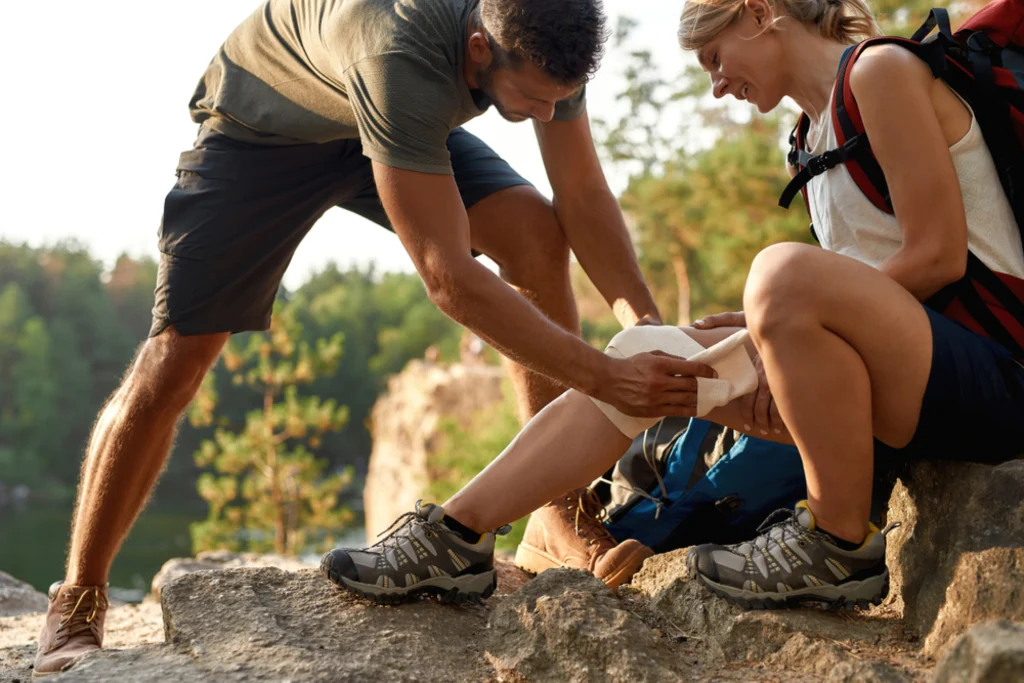
Long-distance trekking is as much a mental test as it is a physical journey. Anyone who has spent twelve hours on a trail knows the unique mix of exhaustion and euphoria that comes with watching the sun dip below the horizon as you finally approach the trailhead or campsite. Yet, statistically, the most dangerous part of any trek is not the exposed ridge, the steep scramble, or the river crossing miles back. It is the final hour.
When your legs are heavy, your core muscles are fatigued, and your focus begins to drift toward a hot meal or a soft bed, your body undergoes subtle shifts in mechanics and perception. Proprioception—your brain’s awareness of where your limbs are in space—starts to degrade. Reflexes slow down just enough that a loose rock or a protruding root becomes an unmanageable hazard.
Preventing late-trail trips, awkward stumbles, and debilitating ankle sprains requires recognizing the specific vulnerabilities of late-stage fatigue and implementing deliberate physical and mental strategies to counteract them.
The Physiology of Late-Trail Fatigue
To understand why injuries happen at the end of a trek, you have to look at what happens to the musculoskeletal system over hours of continuous exertion.
The Breakdown of Neuromuscular Control
Early in a hike, your nervous system fires signals to your stabilizer muscles with crisp precision. Every time your foot lands on an uneven surface, micro-adjustments in your ankles, calves, and hips keep you upright.
As hours tick by, energy stores in the muscle fibers deplete, and the central nervous system experiences cumulative fatigue. The communication highway between your feet and your brain slows down. When your boot catches a hidden root near mile fifteen, the reflex that tells your ankle to stabilize fires a fraction of a second too late. That fractional delay is all it takes to turn a minor stumble into a rolled ankle or a full fall.
Gait Degradation and Dragging Feet
Exhaustion fundamentally changes how you walk. Fresh hikers lift their feet cleanly with each stride, maintaining a natural clearance above the terrain. Tired hikers begin to shorten their stride and exhibit a subtle toe-drag.
You stop lifting your feet over obstacles and instead rely on clearing them by the slimmest of margins. When the trail transitions from smooth dirt to rocky debris, that lack of clearance guarantees you will eventually catch a toe.
Strategic Adjustments for the Final Stretch
Recognizing that your body is compromised during the final miles allows you to adjust your approach before an accident happens.
Re-Engage Your Core and Posture
When fatigue sets in, posture is usually the first thing to collapse. Hikers tend to slouch forward, letting their upper body weight drift past their center of gravity. This forces the lower back and knees to work overtime and shifts your balance forward, making it nearly impossible to recover if you slip.
-
Shoulders back, chest open: Force your posture upright, even if it feels uncomfortable. This aligns your center of gravity directly over your hips and feet.
-
Engage the abdominal wall: A lightly braced core stabilizes your entire torso, preventing momentum from throwing you off balance when your foot placement isn’t perfect.
-
Look ahead, not down: It is tempting to stare directly at your boots during the final miles, but staring at your feet limits your field of vision to the next six inches. Keep your eyes scanning three to six feet ahead so your brain can anticipate terrain changes and adjust your stride proactively.
Adjust Your Trekking Poles
If you use trekking poles, they can be your best defense against late-trail stumbles, provided you are using them correctly. Many hikers set their poles and forget them for the entire day, but fatigue demands a tactical adjustment.
-
Lengthen slightly on descents: If the final miles involve a downhill grade, lengthen your poles by a few centimeters to keep your torso more upright and reduce the eccentric load on your quads and knees.
-
Plant with intention: Tired hikers often let their poles drag lazily or plant them carelessly. Treat each pole plant as a reliable third and fourth point of contact. If your legs are losing their stability, let your arms take on a share of the balance burden.
Footwear, Lacing, and Ankle Protection
Your boots or trail runners are your final line of defense against sprains, but improper setup can render even the best footwear ineffective after ten hours on the trail.
The Foot Swelling Phenomenon
Your feet swell significantly over the course of a long day of hiking due to increased blood flow, heat, and physical impact. A shoe that felt perfectly snug at 7:00 AM might feel restrictive or shift differently by 5:00 PM.
Conversely, if your laces loosen over miles of walking, your foot will slide forward inside the shoe with every step. This forward movement causes your toes to jam into the front of the toe box and allows your heel to lift, reducing lateral stability and increasing the likelihood of an ankle roll.
Mid-Trek Lacing Adjustments
Don’t hesitate to take a five-minute break late in the day specifically to re-lace your footwear.
-
Heel lock lacing: If you notice your heel slipping inside the boot, use a heel lock (or runner’s loop) to anchor your heel firmly against the back of the shoe.
-
Check tension distribution: Ensure the pressure is distributed evenly across the top of your foot rather than cinched down painfully at the ankle. You want a secure hold that prevents internal shifting without cutting off circulation.
Pacing and Mental Focus Management
The psychological aspect of finishing a trek is just as treacherous as the physical one.
The Push-Through Fallacy
The psychological phenomenon known as “get-homeitis” or the “finish-line push” causes hikers to drop their guard when they realize the end is near. Mentally, you have already arrived at the car or the tent. You stop paying close attention to every footstep, rushing to close the remaining gap.
This is precisely when accidents happen. Treat the final mile with the same high level of tactical focus and respect that you gave the most technical section of the route.
Mandatory Micro-Breaks
When fatigue peaks, willpower drops, and the temptation to march non-stop until the finish line becomes overwhelming. Paradoxically, pushing through pure exhaustion increases your injury risk exponentially.
-
Take sixty-second pauses: You don’t need a full pack-off rest stop every time you feel tired. Simply stopping for sixty seconds to shake out your legs, drink a few sips of water, reset your posture, and clear your head can completely reset your neuromuscular system.
-
Hydrate and refuel: Late-trail clumsiness is frequently a symptom of low blood sugar or mild dehydration, both of which dull cognitive function and reaction time. Keep a quick-absorbing carbohydrate snack accessible in an exterior pocket so you can fuel on the move without stopping.
Navigating Specific Late-Trail Hazards
Different terrains present unique challenges when your energy reserves are tapped out.
Loose Scree and Gravel
Descending through loose gravel or small stones when your legs are shaking is a recipe for a sliding fall. Instead of trying to fight the movement by leaning back—which causes your heels to dig in and your feet to shoot out from under you—adopt a specialized descent stance.
-
Keep your knees slightly bent to act as shock absorbers.
-
Lean your torso fractionally forward into the slope.
-
Allow your heels to sink slightly into the gravel, using a controlled slide rather than attempting a rigid stop on every step.
Wet Roots and Smooth Rock
Water and sweat combined with failing balance create slippery conditions. When stepping over wet roots at the end of a long day, avoid landing with your foot at an angle. Aim to plant your entire sole flat on the surface rather than striking with the heel or toe, which minimizes the sliding friction coefficient.
Conclusion
A successful trek isn’t measured merely by reaching the summit or hitting the turnaround point; it is measured by returning safely with your body intact. By understanding that late-trail fatigue compromises your balance, reflexes, and gait, you can actively outsmart the most dangerous miles of your journey. Keep your posture tall, scan the trail ahead, adjust your gear as your body changes, and never let the proximity of the finish line override your situational awareness.